How are car-based events changing to adapt to a new audience?
For as long as there have been motor vehicles, there have been events planned around them to showcase the cars, increase trade and in response to public interest. The first British International Motor Show begun in 1903 (Foster, 2011), whilst the first car sporting event – a race at Crystal Palace, was held in 1901 (Collins, 2021). Despite this long history of motor events, in recent times the public attitude towards cars has shifted, a recent survey found 75% of people asked said car use should be reduced for the sake of the environment, and 74% for the sake of public health (Department of Transport, 2020). Such environmental awareness, road congestion concerns, and less interest in driving and car ownership from younger generations (Eliot, 2019) has forced the motoring events industry to adapt in order to appeal to this new audience.
When people think of motoring events in the UK, they often think of traditional events such as car shows. These are often pre-organised events whereby owners and fans of a type of car meet and display their cars (Simoniz, 2016). These are very popular as a chance to see your favourite cars up close- often rare models, and to meet like-minded fans. Often there are competitions and prizes for the best car. However, hosting these is becoming difficult with rising restrictions particularly of access as cities fight to block cars to beat congestion and pollution (Ghini, 2018). For example, a current war is raging in Brighton within its council over continuing to allow the use of Madeira Drive on the busy seafront for multiple car events (Speed Trials, Minis and Land Rovers meets) (Brighton and Hove Council, 2020).
To respond to this, some car show events have moved their venues out of the cities to pre-existing large scale event venues such as Simply Ford (Ford Cars) at Beaulieu, 18th July 2021. For traditional city centre based events, the historical aspect and cultural worth of the classic cars and events is being highlighted, with a move to distance the cars from transport and more like art or history to change public opinion- (the 100 years of Speed Trials in Brighton for example), and the tourism impact on the local community is also highlighted as positive in bringing more money to the city.
Traditional car shows have also had to adapt to the changing interests of the market. The type of cars at shows has changed to appeal to younger audiences, with more cars from the 1980s that would previously not be seen as classics and movie cars, in the hope
of bringing a new generation to the shows as well
as using social media to attract interest.
Car events have also broadened their scope in recent years. It has become increasingly popular to expand traditional car shows into full blown festival events where spectators camp for multiple days, and other festival attractions such as music and performances and food combine with the motor-based attractions to provide an event for all ages and tastes. Examples of these include Carfest – Laverstoke Park Farm (27th – 29th August 2021) and
Goodwood festival of speed – Goodwood (8th -11th July 2021). By doing this, the car event industry is appealing to the popular festival / holiday market as well as making the events places where the whole family can come together, with something for everyone to enjoy- including non-car fans. This has been very popular and helped change the traditional view of car events as places mainly for older men, to events for all ages and interests.
Another way that motoring events have responded to negative environmental pressure over the years is to increase the sustainability of their events. This means making the events themselves environmentally friendly while also considering the economic and social benefits too. Goodwood Festival of Speed is a good example of this. They have been granted the ISO 20121 certification for their events. This is an international event management system standard that the event is fitting sustainability criteria. Some ways Goodwood Festival of Speed does this is using a low emission, fuel efficient generator for the event, using locally sourced products and reusable materials. Water saving devices are installed and a shuttle service runs from the train station – causing a 40% increase in visitors coming by train (Brazao, 2020). By making the event itself greener, this can answer some visitors concerns and make them more likely to attend.
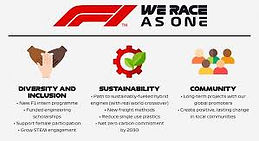
Another example of motoring events using sustainability to increase appeal is in motor based sport. Sport is one of the main reasons for motoring events in the UK. Formula 1 for example, the international motor racing event, is estimated to contribute over £9 billion to UK economy. The 2019 Silverstone Grand Prix had over 141,000 spectators attending on race day. (Haldenby, 2019). Whilst Formula 1 in the biggest event, over 5000 motorsport events take place in the UK a year at different levels (Motorsport UK, 2021). Other events such as banger racing, where old cars race with full contact and try and destroy the competition cars as well as win the race, take place across the country. Formula 1 has a sustainability strategy, aiming to have net zero carbon emissions from ‘factory to flag’ by 2025 and positive change legacy to all local race communities, economies and environments by 2025 (Formula 1, 2019). This helps encourage new fans to attend who may have been put off by the environmental impact of the sport.
Automotive Trade shows and Expos are some of the biggest events in the motoring industry. These give an opportunity for exhibitors, retailers and distributors to mix with garages, body shops and dealerships. These means they can showcase new products and developments to the very customers they are looking for, make contacts and connections and see what their competition is up too. These are held in large conference centres, over several days.
Trade shows will consist of stands and exhibits from multiple organisations as well as seminars, workshops and demonstrations. An example is Automechanika, (NEC Birmingham 8-10 June 2021). These events are very led by market forces, and one obvious change is within the growing electric car market. These events and the new electric car community are one aspect of car events which is rapidly growing, for example Robert Llewellyn's Fully Charged, Electric Vehicle and Clean Energy Show has had to relocate from Silverstone to Farnborough International airport due to needing more space to meet demand (Farnborough International, 2020). By mixing the electric vehicles with the clean energies the three-day show can maximise its impact to both car fans, technology enthusiasts and environmentalists. This is another way in which the car events industry can be seen to be adapting and broadening its audience by making the car just one of the stars of the event rather then the only focus.
In recent months, with the Covid 19 pandemic, a whole new set of motoring events has appeared. These events are not aimed at car lovers but are using the safe social distanced space a car provides as the basis to hold an event such as a comedy show, or music concert safely. Based on the American tradition of drive in movies, these are going a step further to include other event types including theatre and comedy, for example ‘Drive in Comedy’ at the South of England Showground or ‘West End Musical Drive In” at the Troubadour Meridian Water in London. While it is difficult to know if these will stay as popular when restrictions ease, this is an excellent way of how the car-based events industry has responded to a new audience.
In conclusion, while cars themselves may be seen as declining in popularity, car-based events are still a big part of the events industry in the UK. It is important to also point out that there is still a huge number of car fans, for whom the car is the star and for whom the most important part of the event is still the vehicles and car community itself. What the car-based events industry has done is to try and keep those fans whilst expanding the events to appeal to more people – for example rather than just appealing to the car fan, an event like Carfest is often attended by the whole family group. By broadening the events, listening to the consumers fears of the environmental impact of cars, and trying to balance that by making the event itself a positive, environmentally friendly occasion so fans do not feel guilty attending, as well as embracing new sectors such as electric car community and drive in events the car based events industry is managing to stay popular and profitable for an ever changing audience.
References
Brazao, A. (2020) Event Sustainability- The Goodwood Estate. Available at: https://alicebrazao.com/event-sustainability-the-goodwood-estate/ Accessed: 15 February 2021)
Brighton & Hove Council Conservatives (2020) Future of historic motoring events uncertain once again after Greens’ attack. Available at: https://www.brightonhoveconservativecouncillors.com/news/future-historic-motoring-events-uncertain-once-again-after-greens-attack (Accessed: 20 February 2021)
Collins, P. (2021) Britain’s first Motor Race Available at: https://nationalmotormuseum.org.uk/britains-first-motor-race/#:~:text=According%20to%20the%20pages%20of,London%20on%208th%20April%201901. (Accessed: 27 January 2021)
Department of Transport (2020) National Travel Attitudes Study – Wave 2. Available at: https://assets.publishing.service.gov.uk/government/uploads/system/uploads/attachment_data/file/858253/national-travel-attitudes-study-wave-2.pdf (Accessed: 21 February 2021)
Eliot, L. (2019) ‘The Reasons Why Millennials Aren't as Car Crazed as Baby Boomers, And How Self-Driving Cars Fit In’, Forbes. Available at: https://www.forbes.com/sites/lanceeliot/2019/08/04/the-reasons-why-millennials-arent-as-car-crazed-as-baby-boomers-and-how-self-driving-cars-fit-in/?sh=7a8878bb63fc Accessed: 22 February 2021)
Farnborough International (2020) The UK’s no.1 electric vehicle show set to take-off in 2020 at Farnborough. Available at: https://www.farnborough.com/media/news-blog/the-uk-s-no-1-electric-vehicle-and-clean-energy-show-set-to-takeoff-in-2020-at-farnborough/ (Accessed: 17 February 2021)
Formula 1, (2019) Sustainability Strategy Available at: https://corp.formula1.com/wp-content/uploads/2019/11/Environmental-sustainability-Corp-website-vFINAL.pdf (Accessed: 2 February 2021).
Foster, O. (2011) ‘The British Motor Show: History in the making’, The Independent, 22 September. Available at: https://www.independent.co.uk/student/magazines/the-british-motor-show-history-in-the-making-409718.html (Accessed: 27 January 2021)
Getz, D. (2007) Event Management and Event Tourism. New York: Cognizant Communication
Ghini, A. (2018) What is the future of Classic Car events Available at: https://tcct.com/forum/the-circle-2018/sessions-2018/what-is-the-future-of-classic-car-events/ (Accessed: 22 February 2021)
Haldenby, N. (2019) Formula 1 attendance figures on the rise in 2019. Available at: https://f1destinations.com/formula-1-attendance-figures-on-the-rise-in-2019/#:~:text=the%20Dutch%20driver.-,Britain,the%20gates%20on%20race%20day. (Accessed: 27 January 2021)
Hudson, P. (2016) ‘First British Grand Prix at Brooklands celebrated’ The Telegraph, 9 August. Available at: https://www.telegraph.co.uk/cars/classic/first-british-grand-prix-at-brooklands-celebrated/ (Accessed 27 January 2021)
Motorsport UK (2021) Events spanning all types of motorsport Available at: https://www.motorsportuk.org/events/ (Accessed 27 January 2021)
Simoniz (2016) How to Survive a car show. Available at: https://www.holtsauto.com/simoniz/news/survive-car-show/ (Accessed 27 January 2021)